
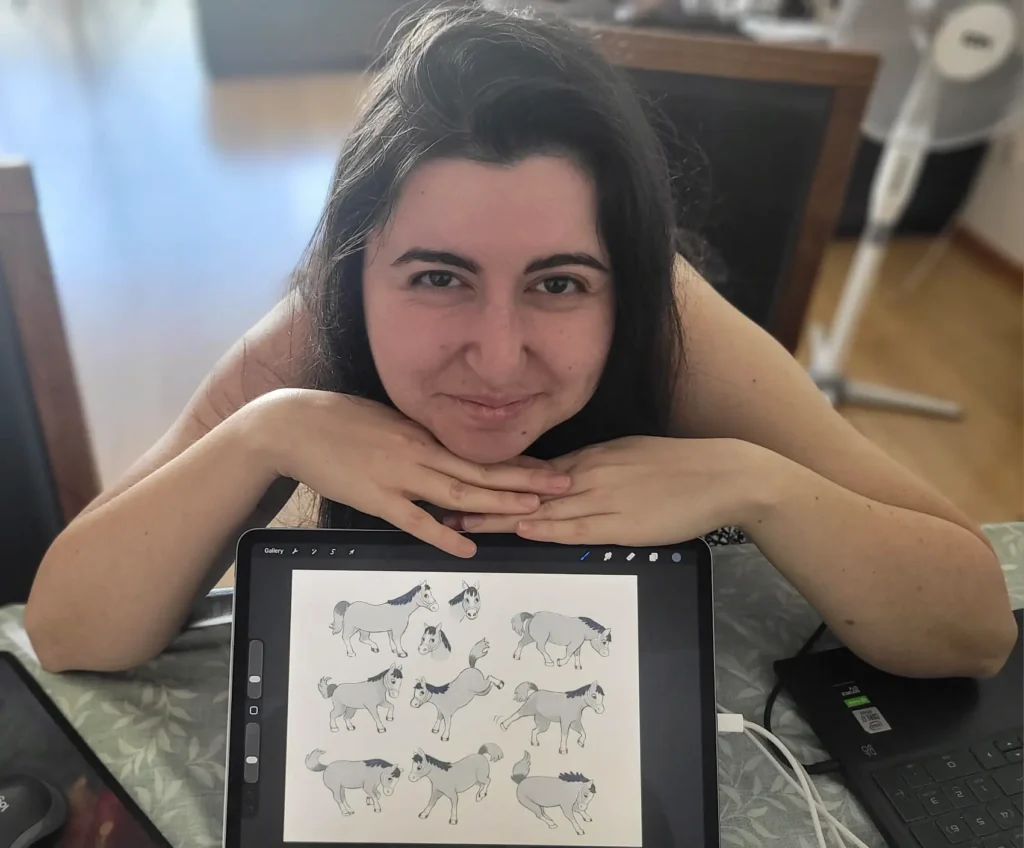
So much of making it as a freelance illustrator depends on marketing, and as an introvert –
Marketing has been the single most challenging thing I’ve ever had to learn.
Not because it was beyond my capabilities, but because of the things that I used to tell myself.
When I looked up marketing tutorials online, most of what I saw were energetic, extroverted people who were very comfortable in front of a camera.
People who were polar opposites of me.
Their videos had captions like:
‘Steal these five hooks for your reels.’
‘How I went from zero followers to 100k in just a few months.’
And ‘Just follow these three simple steps to go viral’.
I looked at those videos and thought –
Do I need to change who I am to be able to make it as an illustrator?
The answer to that question was yes – but not in the way that you might be thinking.
Let me start with two simple facts to put things into perspective:
- To be a children’s book illustrator, you only need 4-6 clients per year. That’s it.
- There are plenty of freelance illustrators like myself making a living from art who have less than 1000 followers on social media.
In fact – I think that the followers I have on all social media platforms combined doesn’t reach that number.
Yet still – I’m booked almost a year in advance.
That’s the benefit of choosing a niche that fits my temperament.
A single children’s book can take anywhere from three to twelve months – depending on complexity and page count.
To be booked a year in advance simply means that I have five projects lined up.
And half of them are from repeat clients – which I didn’t even have to work for.
I did a good job – so they came back.
You don’t need to be constantly going viral in order to make a living as a children’s book illustrator.
Keep that in mind for the rest of the guide.

So where should you start?
Unlike many of the marketing experts that I followed when I started out –
I’m not going to sell you a one-size-fits-all solution.
We’re all unique and something that worked for me might not work for you.
However – I still think that sharing my own journey could help you find your own path.
You can learn from my mistakes and take notes from my successes.
So here is what I did to get to where I am today:
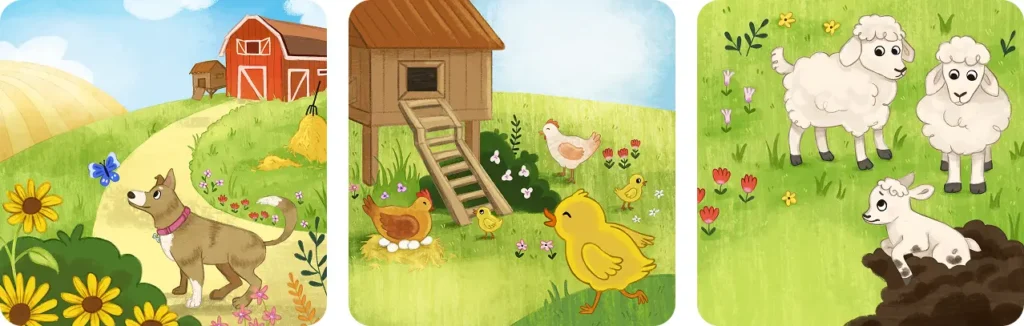
The first thing I did was build my portfolio.
I will keep this section brief because I think there’s plenty of advice out there on this particular subject, and this blog is more about the marketing side of things.
Here are some things your portfolio can benefit from:
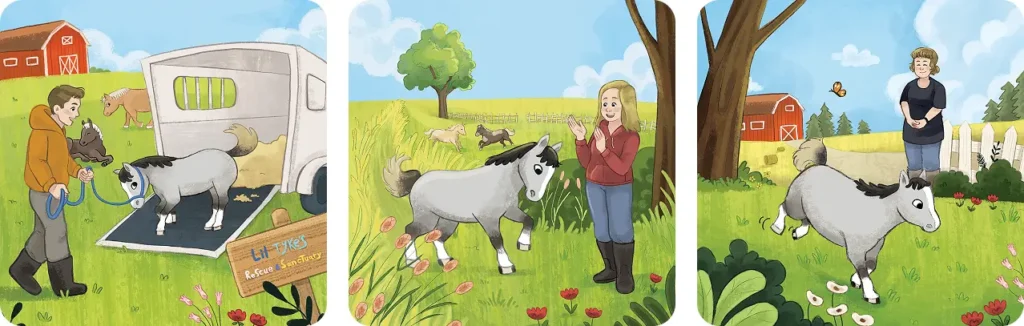
- Character Designs: Show that you can keep a character consistent in different angles, doing different things and showing several emotions.
- Storytelling: Show a sequence of events, not static poses.
- Staying focused: When I was reading up on portfolio advice I saw a lot about variety. You should have drawings of animals, fantasy creatures, different settings – nature, school, home – the list never ended.
While you do want at least some of these things in your portfolio when you send it to agents – chances are you won’t get to that level very quickly. Which is completely okay.
If you haven’t illustrated a book yet, I would focus on illustrating family scenes instead.
Not only do a lot of picture books center around family, but many self-published authors base their characters on their sons, daughters or other family members.
When you start out, indie-authors will likely be your bread and butter.
If you find that you have more time to illustrate, I would also add pets.
But that’s it – don’t overwhelm yourself. The rest of the subjects will come up naturally in future work and you can just include it in your portfolio then.
If you take anything away from the portfolio building section – let it be this:
Your portfolio doesn’t need to be perfect in order for you start looking for work.
So you have your portfolio – What now?
When I started out, I commented on every work for hire post I saw on Facebook.
I wasted time and energy applying for jobs on Upwork, and searched for any job openings on Linkedin that were even halfway related to illustration.
Not only did that approach not bring me many clients – but the clients it did bring me legitimately made me want to quit illustration altogether.
The reason this approach doesn’t work is this:
There are hundreds of illustrators competing for the same gig, and even if your art is the best thing since Van Gogh – the chances of it standing out is close to zero.
You don’t want to chase after clients.
You want clients to come to you.
So instead of creating a hundred accounts on platforms like Upwork, here is what I eventually learned to do:
I started posting in relevant Facebook Groups.
By relevant I mean any group I could find where I thought there was a good chance my clients might be hanging out.
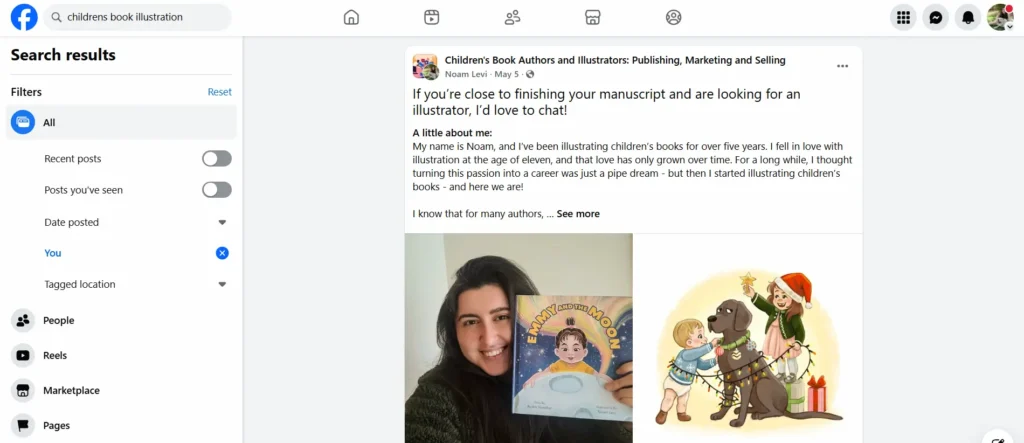
I typed ‘Children’s Book Illustration’ into the search bar and looked at the results.

✅ Groups that connected authors to illustrators made the list.
✅ Groups that emphasized their stance against AI also made the list – not because of my own personal opinion on the subject, but because it drew authors who were looking to work with authentic illustrators.
✅ Groups that had words like ‘Hire’, ‘Professional’, or ‘Service’ in the name went on the list as well – because they showed clear intent.
❌ You don’t want to post in generic art groups. Chances are – your clients aren’t there.
After I had a list, I filtered them by the number of members they had.
To save time, I didn’t post in groups with less than 4-5k members unless the group was hyper specific to what I was offering.
When I started, my list was pretty long. I think I had around 40 groups saved. Now I only post in five.
With time you’ll learn which groups work best for you.
Now that you know where to post – what should you post?
I hear the following sentence very often:
“The market is so saturated right now. How am I supposed to stick out?”
I think this feeling transcends time and industries.
I heard it from friends who went into graphic design, programming, heck – even from someone who wanted to run Dungeons & Dragons games online for a living.
What most people don’t understand is that the majority of the noise is static, and if your voice is unique – it will rise above it.
Don’t believe me? Type ‘children’s book illustration’ into Facebook, filter by date instead of relevance and see for yourself.
You’re likely to see posts that include a few artworks with little to no context, and a truly ridiculous number of AI scam posts that were generated and written by ChatGPT.
Quantity is not quality, and I’ve never seen an AI scammer rise to the top.
If you click on most scam posts – the comment section will be filled with people pointing out that it’s AI.
Instead, you should be focused on developing whatever it is that you can bring to the table that others can’t or simply aren’t.
I’ve read that advice before, and it was probably the one that I ignored the most.
I know why I did though. I ignored it because It’s super vague.
But it’s vague because that something will be completely different for you.
I’m not saying that to demotivate you.
I’m saying that so that you don’t end up being harsh on yourself if or when your first few posts don’t do so well.
Getting enough traction to your posts will be a combination of you getting to know your audience and leveraging whatever unique ‘offer’ it is that you bring to the table.
That takes time.
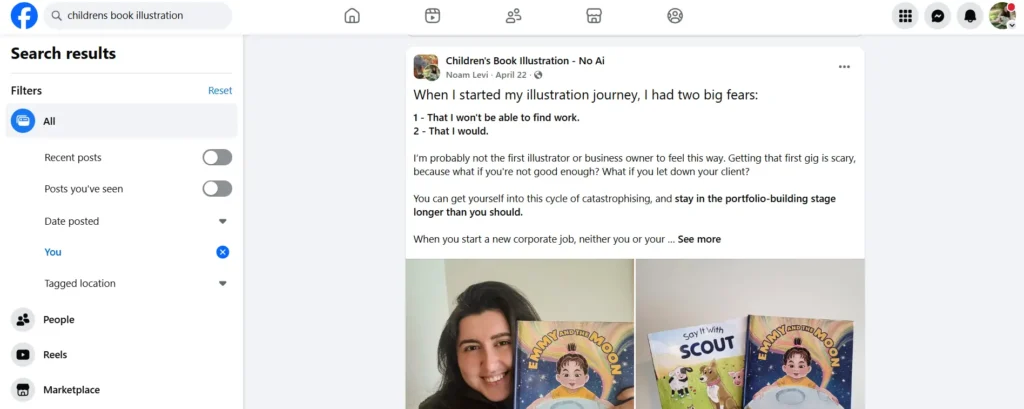
Here are a few things you can talk about in your posts, so that you have a starting place:
- Yourself.
- Your art.
- Your process.
- Your journey.
Anything that isn’t a generic “Hey everyone! I’m looking for my next project!” Already has a better chance at sticking out.
You might need to write quite a few posts before you can hone in on what things you could offer that you think potential clients might be interested in.
For me personally, things clicked when I started offering clients a one-stop-shop sort of solution.
I am an illustrator first, but I also format and prepare books for print, create mockups they can use for promotional purposes, and generally guide them through the process.
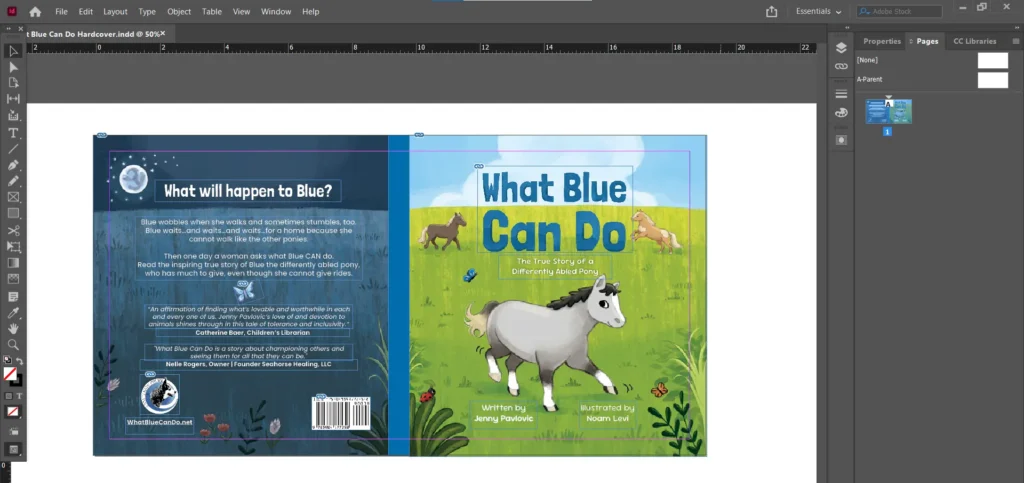
That is my unique offer – and to be honest – I don’t even think it’s that unique.
You don’t have to re-invent the wheel.
I simply helped solve a problem that many indie authors struggle with.
Writing and illustration are only two aspects of a picture book. All I did was take some work off their plate, listen to their struggles and give advice where I felt I was qualified to.
I chose that particular unique offer because it was a perfect balance between what my clients needed – and what I was genuinely already super passionate about to begin with.
Let’s talk about how often you should post.
You hear this piece of advice constantly – ‘Consistency is key’.
And it’s true. It absolutely is.
However, I want to talk about why despite the fact that we hear this advice all the time –
Many of us still struggle to follow it.
Let’s get something out of the way first:
No, the reason why you’re finding it difficult isn’t because you’re lazy.
It just happens to be very easy to set yourself up for failure when you have no clue where your limits are.
Deciding out of the blue that from now on, you’re going to post three times a week, isn’t something that all of us can pull off.
It’s like a crash diet. You’re not building a habit, you’re just punishing yourself.
I learned that if I don’t negotiate fairly with myself – I simply won’t do it.
So what does that mean, ‘fairly’?
It means that you should post in a schedule that’s realistic to you.
Arguably the biggest factor influencing your chances of becoming a full-time freelancer is your mental health.
I don’t see nearly enough people talking about that.
You’re not running a company. You’re overseeing just one employee – and that employee is you.
You better learn to be a good boss to her or him – or they will end up quitting. And they are literally irreplaceable.
Personally, I’ve struggled with anxiety from a very young age and that really affected my work.
I had to learn to be humble and admit that sometimes the goals that I set for myself were too ambitious. At least for how I was doing mentally at the time.
For me, a posting schedule of three times a week was simply too much.
I was overthinking each and every one of my posts.
Even posting once a week was a struggle, and I would get stomach aches just thinking about it.
Not to mention that when many of us start out – we also have full-time jobs to juggle.
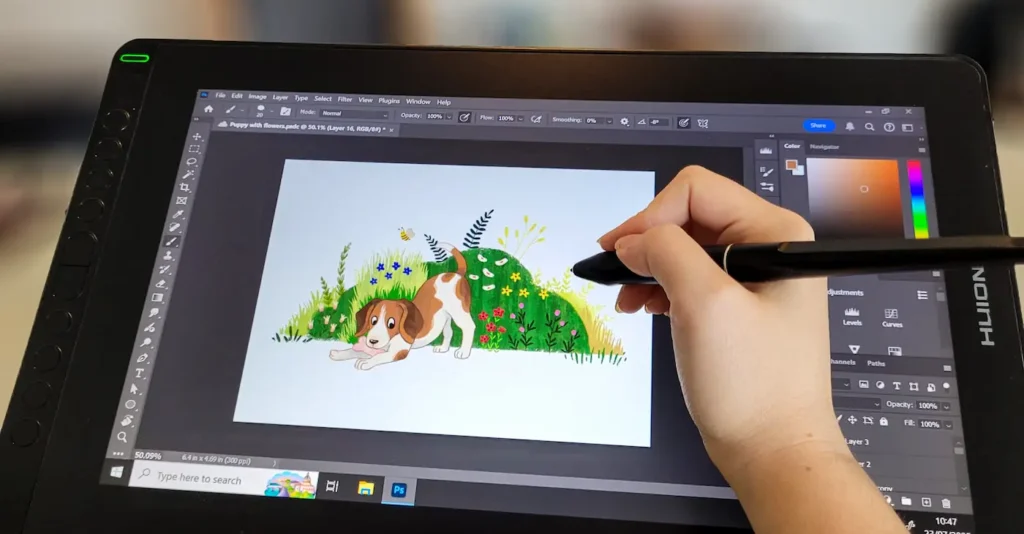
So I started posting once every two weeks instead.
Yes, that meant that my progress was slow.
But if I didn’t allow myself to start that small – I would’ve never managed to make children’s book illustration my career.
Two years later – I can easily post twice or three times a week if needed.
But you might be relieved to know that when you know your target audience – once a week is usually enough.
If I had to leave you with one last tip, it would be this one:
Trust puts you above competition.
There are so many childrens’s book illustration scams out there – now more than ever thanks to AI.
Authors are rightfully suspicious.
Anything you can do to help reassure them that you’re legit will put you above the rest.
Whether or not you’ve found that ‘thing’ that only you can bring to the table yet – putting effort into becoming a trusted freelancer will already give you higher chances of getting hired.
Things that can help you in that regard include:
- Making a dedicated website for your portfolio.
- Offering to hop on a video chat with potential clients.
- Recording the process of your illustrations. Procreate has this built in and OBS studio is simple and free if you use Photoshop or another drawing software.
- Adding reviews to your website after you’ve already finished illustrating 2-3 books.
You can make children’s book illustration your full time job. I fully believe that.
Will you need to change yourself in order to do that? Maybe.
But the change you have to make has nothing to do with becoming more extroverted and everything to do with the way that you manage yourself.
Good luck to all of us!
Feel free to reach out if you’re struggling and need advice. I might be able to help.